Takeaways
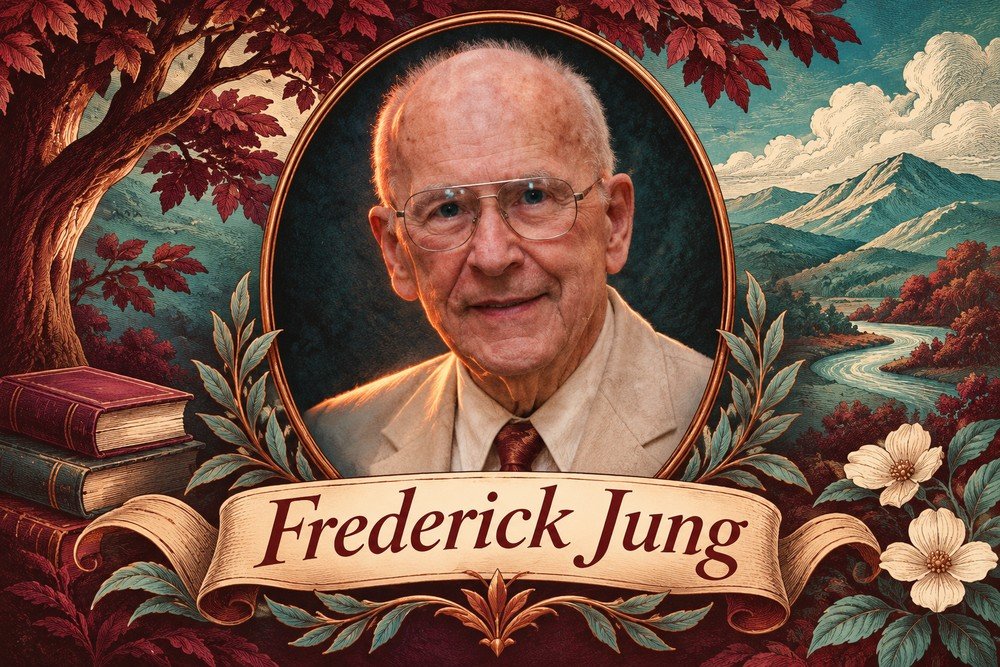
Frederick Jung is remembered publicly as the father of George Jung, whose drug-smuggling story entered popular culture. The source describes Frederick as a Massachusetts small-business owner, but much of his biography is filtered through his son’s later notoriety. A fair account separates the father’s reported working life from the criminal history and movie portrayals that shaped the family name.
A New England life before the headlines
The profile gives Frederick’s full name as Christian Frederick “Fred” Jung Jr. and places his birth in Massachusetts in 1912. It says he married Ermine O’Neill in the 1930s and built a household around a small business. These details create a picture of a working family in a period marked by depression, war, and postwar change. They should be checked against civil records where possible, but they also help restore the ordinary chronology that can vanish when one relative becomes infamous. The reported details here draw on the account of Frederick Jung.
Fatherhood in the shadow of crime
George Jung’s later criminal activity altered how the public understood his parents. A child’s choices do not straightforwardly reveal a parent’s character or control, yet biographies often use the parent as a symbol of a moral lesson. The source depicts Frederick as a steady father, but that characterization should remain attributed rather than turned into a proven psychological portrait. The FBI’s historical case archive shows how law-enforcement stories become part of public memory; it offers broad context, not evidence about the private Jung household.
The small-business detail
The account’s most concrete description of Frederick’s work is that he ran a small business. It does not identify a full business history, company records, or the day-to-day responsibilities involved. That gap need not be covered by inventing a shop counter or a particular trade. Small businesses often anchor family finances and community routines, but the specific facts here remain limited. A local directory, census record, tax listing, or obituary might help identify the enterprise and establish its dates.
A family story retold through film
Popular films compress time, invent dialogue, and combine events to create a coherent drama. When a father character appears in a movie about George, audiences may assume those scenes reproduce documented conversations. They do not necessarily do so. Film can be a useful pointer to why a family has become culturally visible, but it is not a substitute for biographies, court records, or interviews. The source itself acknowledges that dramatization shapes impressions of Frederick. That caution should guide any retelling of scenes shown on screen.
The danger of symbolic biography
A parent can become a convenient symbol: the person who tried to keep a child on the right path, or the quiet figure supposedly explaining a later crime. Such interpretations may be emotionally satisfying but exceed what dates and family anecdotes can establish. A more careful account asks what is documented about Frederick himself—his family, work, and lifetime—and distinguishes that from retrospective commentary. The family connection matters, but it should not turn into a verdict on either father or son.
A grounded legacy
Frederick died in 1988, according to the source, before later media interest intensified around George’s story. His public legacy is therefore largely retrospective. That does not make it unreal; it means the available account needs clear boundaries. The FBI’s archive helps readers understand the institutional history of famous cases, while family and local records would be needed to verify Frederick’s personal details. The most humane portrait is one that recognizes a working parent and family member without making him responsible for a son’s later choices. Local newspapers and business registers could further document his own working life. An obituary or census schedule may help establish the family’s residence and chronology independently.