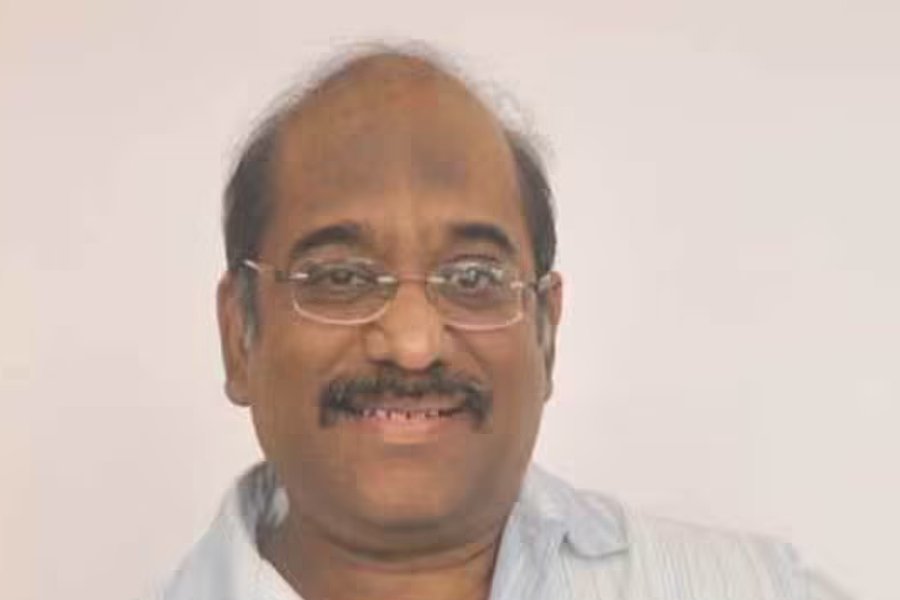
The Man Who Held the Frame Steady
I think of Akkineni Venkat as the kind of figure who does not step into the spotlight, yet helps decide where the spotlight falls. In a family tree that has grown into a towering cinema canopy, he has often stood where the roots meet the trunk. His public profile is modest, but modesty can be deceptive. A studio does not survive on glamour alone. It needs memory, judgment, patience, and the discipline to keep moving when the room is full of louder voices. That is where Akkineni Venkat becomes important.
His name is attached to Telugu cinema history not because he chased celebrity, but because he worked inside the machinery that makes celebrity possible. Film production is not a trumpet blast. It is a long pulse beneath the music. It requires someone to carry risk, coordinate effort, and keep a project alive when schedules shift and ambitions collide. Akkineni Venkat appears to have built his place in that hidden architecture. His story is less about noise and more about structure, like the iron ribs of a bridge no one praises while crossing.
A Family Built Like an Archive
To understand Akkineni Venkat, I have to understand the family around him. The Akkineni name is not just a surname. It is an archive, a corridor of portraits, one generation opening into the next. His father, Akkineni Nageswara Rao, became one of the defining figures of Telugu cinema. His mother, Annapurna Akkineni, remains central to the family identity and to the legacy of Annapurna Studios. His brother Nagarjuna Akkineni turned that legacy into a modern public brand, while other family members carried the name into new decades through acting, production, and media visibility.
What makes this family unusual is not simply fame. Many families are famous. Few become institutions. The Akkineni family resembles an old cinematic reel that has never stopped rolling. Each generation appears to inherit not only talent, but responsibility. That inheritance matters. When a family becomes a public symbol, each member is forced to decide whether to perform the legacy or preserve it. Akkineni Venkat seems to have chosen preservation. That choice can look quiet from the outside, yet it often requires the most discipline of all.
The Studio as a Second Home
Annapurna Studios is more than a business address. It is a living emblem of the family’s role in Indian cinema. For someone like Akkineni Venkat, a studio is not just a workplace. It is a family room expanded to architectural scale. Corridors, editing bays, production offices, sound stages, and meeting rooms can all become part of personal history when the family itself has helped shape the space.
I see his role as one of continuity. Some people build a house. Others keep it standing through storms, renovations, and changing tastes. Akkineni Venkat belongs to the second kind. He has been associated with production oversight and studio administration, work that rarely earns applause but often determines whether art reaches the screen in one piece. That sort of labor is like stitching on the inside of a garment. Invisible from afar, essential up close.
A studio can become a temple of memory if someone tends it properly. It stores old successes, protects unfinished dreams, and makes room for the next generation to arrive with fresh energy. In that sense, Akkineni Venkat is part caretaker, part strategist, and part custodian of family memory.
His Producer Identity and the Films That Mark It
Any discussion of Akkineni Venkat has to include his producer credits, because those titles give shape to his professional footprint. The films most often linked to him include Shiva, Iddaru Iddare, and Rakshana. These are not merely entries on a list. They belong to a period when Telugu cinema was changing, when new styles, new stars, and new production rhythms were pulling the industry forward.
Production is a demanding craft. A producer does not merely attach a name to a project. A producer carries the burden of momentum. Money, timing, casting, scheduling, and release strategy all have to line up like moving gears. One broken tooth can jam the whole machine. That is why a producer’s name, even when quiet, matters so much.
For Akkineni Venkat, those film credits suggest a practical mind and a willingness to invest in work that could stand on its own. I do not read his career as one built on self-display. I read it as one shaped by stewardship. He seems to have understood that some of the strongest contributions in cinema happen off camera, in the unseen pressure points where decisions become outcomes.
A Public Presence That Grew More Visible With Time
What interests me most is how Akkineni Venkat’s visibility has played out over the years. He is not known for flooding the public sphere. He does not appear to have built his identity through constant media performance. Instead, his presence tends to surface around family milestones, studio celebrations, anniversaries, and commemorative events. That pattern says something important.
Some people live like fireworks. Others live like lamps. Akkineni Venkat belongs to the second category. His light is steadier, less dramatic, but often more useful. In an era where attention is treated like currency, restraint can feel almost radical. He seems to have preferred a role that places the family and studio before the self. That is not disappearance. It is discipline.
This kind of public rhythm also helps explain why he remains relevant. A low-profile figure can fade, but Akkineni Venkat appears to have remained connected to the family’s ongoing story through presence rather than performance. That distinction matters. Presence ages well. Performance often burns out.
What Family Legacy Means in the Present
The Akkineni family’s newer generations have kept the spotlight active, which creates a fresh context for Akkineni Venkat. The legacy is no longer historical alone. It is still unfolding. Weddings, memorials, awards, and studio anniversaries continue to redraw the family map. That means older family members are not relics. They are reference points.
I find that especially meaningful in a film family, because cinema tends to love novelty. New faces arrive, new platforms appear, and old names risk becoming footnotes. Yet Akkineni Venkat remains part of the internal grammar of the family story. He represents a bridge between the classic studio era and the current age of publicity, digital visibility, and brand building. If others are the billboards, he is the foundation slab beneath them.
There is also a deeper truth here. Families that last in public life usually survive because not everyone in them wants the same kind of attention. One person fronts the camera, another maintains the institution, another carries memory, another extends the brand. Akkineni Venkat appears to have chosen the role that protects the larger whole. That choice can be underestimated, but I think it is one of the most honorable positions in any dynasty.
The Shape of His Legacy
When I look at Akkineni Venkat, I do not see a biography built on spectacle. I see a life shaped by continuity, administration, and quiet authority. He belongs to a generation that understood how to keep a family enterprise alive without turning every action into theater. That matters because legacies are fragile. They crack when no one tends them. They harden when everyone tries to own them. Balance is rare.
His place in cinema history is therefore indirect but real. He helped sustain a studio environment connected to one of Telugu cinema’s most recognized families. He contributed to production work that remains part of the industry’s memory. He stood near the machinery that keeps a film family from becoming only a name on a plaque. In that sense, Akkineni Venkat is not peripheral. He is part of the support beams.
FAQ
Who is Akkineni Venkat?
Akkineni Venkat is a member of the Akkineni film family known for his work as a producer and for his association with Annapurna Studios.
Why is Akkineni Venkat important to the Akkineni family story?
He represents the quieter side of the family legacy, the side that maintains continuity, supports production work, and helps preserve the studio identity across generations.
What kind of work has Akkineni Venkat done in films?
He is linked to production and studio administration, including producer credits on films such as Shiva, Iddaru Iddare, and Rakshana.
How does Akkineni Venkat differ from more public family members?
He has generally kept a lower profile than relatives such as Nagarjuna Akkineni, focusing more on stewardship than celebrity.
What role does Annapurna Studios play in his life story?
Annapurna Studios forms a major part of his professional and family identity, serving as a center of production, administration, and legacy.
Is Akkineni Venkat known for public controversies?
He is not widely associated with major public scandals. His public image is more closely tied to family events, studio history, and quiet participation in the Akkineni legacy.
Why does Akkineni Venkat remain relevant today?
He remains relevant because the family legacy continues to evolve, and his role helps connect the older studio era with the present generation.