A first impression that sticks
I remember the first time I flipped through an editorial that felt like it had been stitched together from honest angles. It was not just the clothes that caught me. It was the way the garments inhabited the models, the way shadows and light negotiated space around bodies that had rarely been granted narrative weight. Tiffany Kaelin Knight has a way of making the lens listen. Her work reads like a manifesto written in fabric and gesture, not in slogans. I want to explore that sensibility, the ripple effects it sends through fashion, and the quieter seams of her story that often go unnoticed.
The language of styling
Styling is a kind of translation. A garment speaks in silhouette, texture, and historical reference. A good stylist decodes and amplifies. Tiffany Kaelin Knight treats clothes like dialects. She arranges pieces so that each one says something true about the wearer. I have watched editors who reduce styling to trend-chasing. She does the opposite. She looks for the moment when clothing and model become collaborators. That collaboration produces images that feel like sentences with a strong verb rather than decorative commas.
It is easy to mistake styling for decoration. It is harder to see it as argument. Her photographs argue for presence. They refuse to let subjects be background props. Instead of stylizing a body into a preexisting trope, she crafts situations where a garment clarifies identity. When I think of her signature moves, I think of restrained theatricality: a prop used once to convict a pose; a color placed precisely to change the subject’s temperature; a silhouette shifted to reclaim proportion. These are small choices with large consequences.
Roots, resonance, and public family life
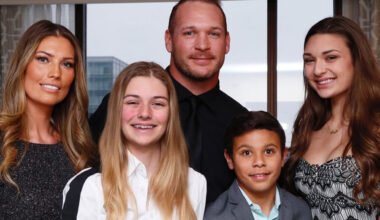
Family names can be like wind; they either blow you off course or propel you forward. Tiffany Kaelin Knight has navigated the gusts of a public family history while carving out an independent voice. I have noticed that artists who grow up beside fame either run from its reflection or bring it into focus to better see themselves. She appears to have chosen the latter. The visibility around family has not diluted her work; if anything, it has sharpened her resolve to let her own creative work stand on its own merits. I read a tension in her imagery that feels like private history folding into public narrative. That tension is generative.
I also see the practical intelligence in her approach to legacy. There is a kind of lineage in editorial work that is rarely acknowledged. Stylists inherit sensibilities and then disrupt them. In Tiffany Kaelin Knight’s case, the inheritance includes an awareness of how public narratives form. Her images often stage a reclamation, turning family name into a footnote rather than the headline.
The collaborative web: photographers, makeup artists, models
Editorial work is not a solo sport. It is a choreography of multiple hands. Tiffany understands this. Her editorials read as ensembles where every collaborator has a distinct voice, yet the final product is cohesive. I look for patterns across her shoots and notice recurring partnerships and a preference for teams that are willing to take aesthetic risks. Those collaborations allow for experimentation in narrative voice and technical execution.
What intrigues me is how she uses collaboration to decentralize authorship. Models are not mere mannequins. Photographers are not sole narrators. Makeup artists and stylists become equal contributors to meaning. In that sense, her projects feel like small democracies. And democracies require negotiation, which she seems to handle with a steady, pragmatic generosity.
Ethics of representation and editorial responsibility
When you center bodies that mainstream fashion historically marginalizes, the stakes are ethical as much as aesthetic. Representation can become tokenism if it is executed without depth. I find that Tiffany Kaelin Knight avoids that trap. Her direction often asks viewers to pause and consider proportion, not as a deficit but as a grammar of design. She treats models as interlocutors in the shoot, not just as surface.
This ethical stance has implications beyond any single magazine. It reframes editorial responsibility. Images shape cultural taste. When an editor or stylist chooses to depict a wider spectrum of bodies with dignity and narrative complexity, they recalibrate what audiences perceive as canonical beauty. I see her work as a small but steady recalibration.
Digital presence and archival importance
In the internet age, editorial work moves through many channels. An image published in a magazine travels to social feeds, to blogs, to curated lists. Tiffany Kaelin Knight has used these channels to sustain the life of an editorial beyond its initial publication date. The digital archive functions like an afterlife for styling choices. A well staged photograph can be repurposed into conversation, critique, or inspiration.
But digital ephemera has its pitfalls. I care about archival integrity. Without careful preservation, the context of a shoot can be lost as quickly as it is shared. I respect the way she annotates releases and credits collaborators, because those small acts make future research and appreciation possible. Credit is not merely courtesy. It is a record.
Pattern recognition: recurring motifs in her editorials
If you map her work across years, a few motifs recur. There is a fondness for cultural referents that are reimagined rather than aped. There is a playfulness with nostalgia that avoids pastiche. There is also an insistence on humane portraiture, where editorial sets become intimate rooms rather than spectacle stages. When I study her color palettes, they read like punctuation marks: bold, but used sparingly to guide the eye.
This consistency does not feel repetitive. It feels like a signature. The repetition of certain gestures across shoots creates a recognizable voice while leaving space for surprise. That balance is rare. It requires confidence and restraint in equal measure.
The role of mentorship and community building
I have noticed that creatives who stay tethered to community tend to produce work that resonates longer. Tiffany Kaelin Knight often highlights other creatives in her circles. That practice is a form of mentorship without ceremony. It says that uplifted careers are not zero sum. If a burgeoning photographer or makeup artist appears alongside a veteran model in her shoots, their shared visibility enlarges the field for everyone. I value that approach because it turns editorial pages into ecosystems rather than gallery walls.
FAQ
Who is Tiffany Kaelin Knight?
Tiffany Kaelin Knight is an editorial stylist and creative director known for work that foregrounds body diversity. I see her as a practitioner who blends aesthetic precision with ethical clarity, carving a niche in fashion that privileges presence over perfection.
What kind of editorial work does she do?
She focuses on magazine editorials and creative direction that emphasize plus size and body positive narratives. Her work often reimagines cultural references and uses collaboration to shape nuanced portraiture.
How does her family background influence her work?
Her family visibility informs a part of her public identity, but it does not overshadow her creative practice. I sense that familial context has sharpened her attention to narrative and public perception, and that it contributes a layer of complexity to her imagery.
Where can one view her projects?
Her editorials circulate through traditional magazines and digital platforms. I have observed that she keeps an active presence in social and industry spaces, which extends the life of individual shoots and keeps her portfolio accessible.
Why does representation matter in editorial styling?
Representation changes what we consider normal. When stylists like Tiffany Kaelin Knight center bodies that mainstream fashion has marginalized, they alter the cultural vocabulary of beauty. The result is not merely visual. It is civic. It expands the range of what a camera can acknowledge and celebrate.